
Ben Hall Family 1802-1977
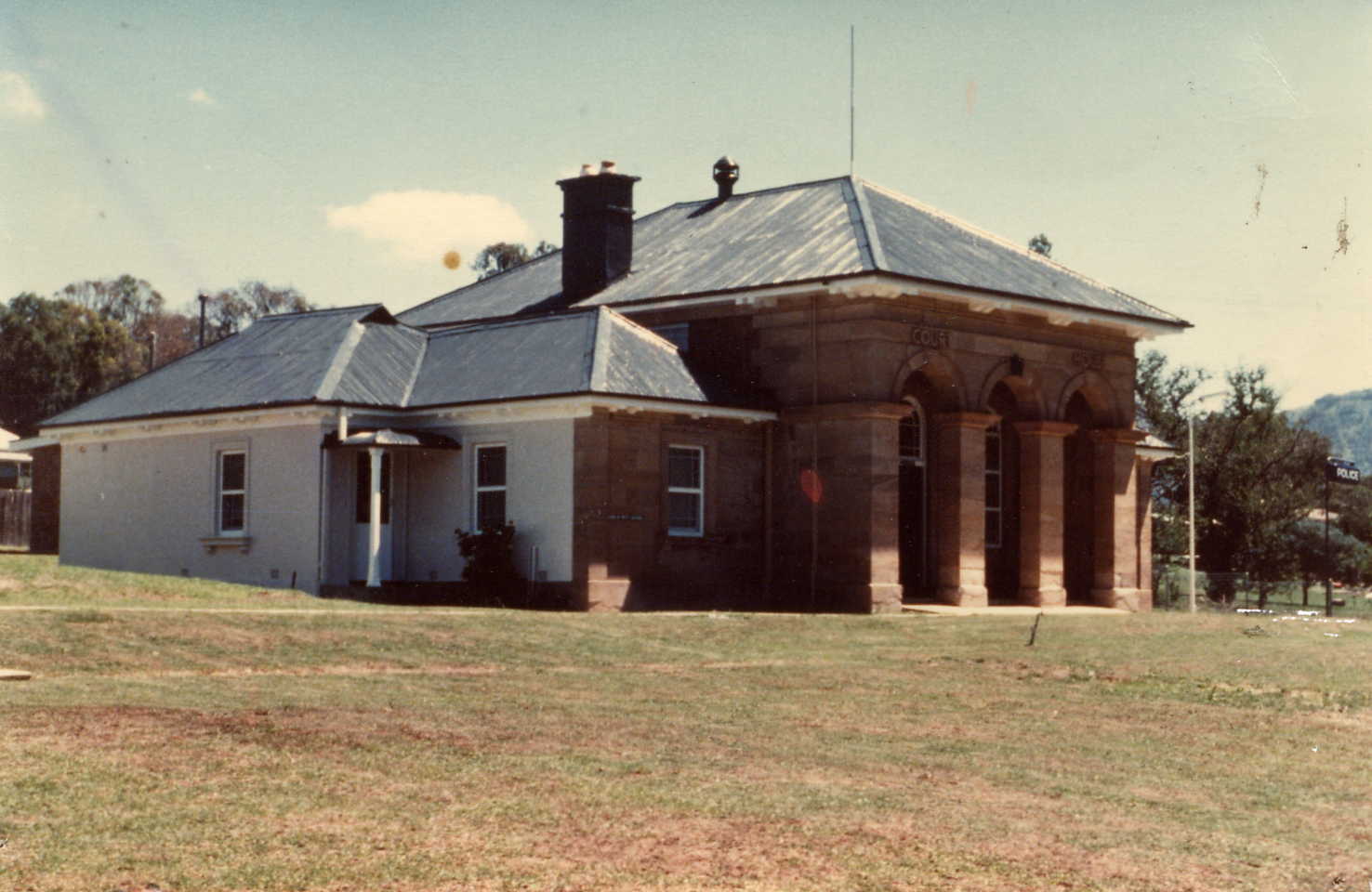
The name of that creek raises the question of whether it commemorates him. Across the Page's River and between Haydonton and Murrurundi George Hall owned the land and had done since 1836. He had a residence called Rosedale but while Hall's Creek joins Page's River opposite his land the land along the creek belonged to Thomas Haydon. The fact that the name Hall's Creek does not appear until well after 1845 rather indicates that the name commemorates Benjamin's.
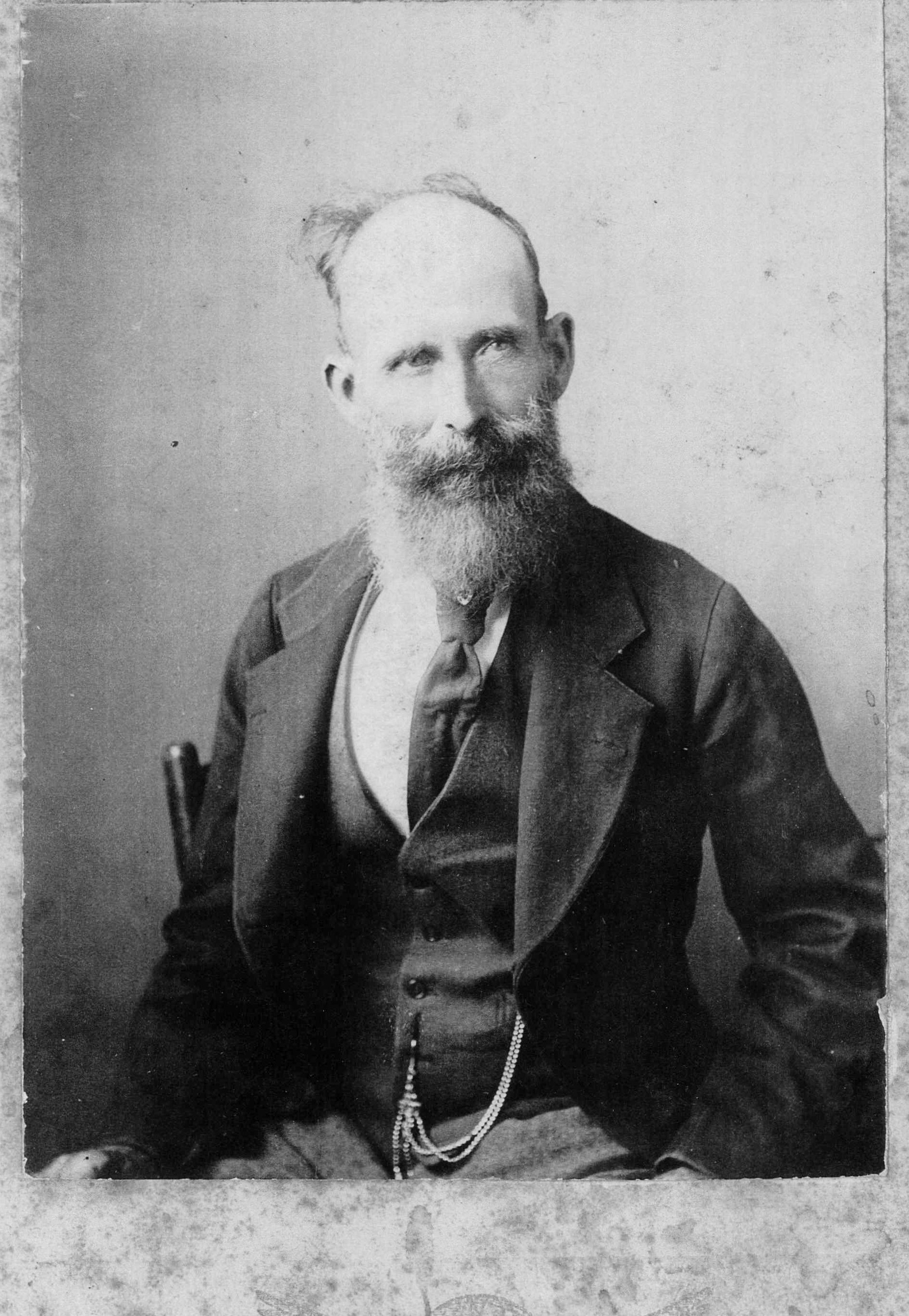
As mentioned, Robert Hall (right) was born on April 23 and he was baptised at St. Joseph's chapel by Rev. Fr. Lynch on May 10. He is the first of Benjamin's children of which there is a baptismal records.
By 1842 Tommy Wade would have been 10 years old. He would have had his 11th birthday in that year and was probably working with Benjamin. Mary who would have turned nine in that year was probably her mother's chief assistant. William who turned eight may have assisted his father.
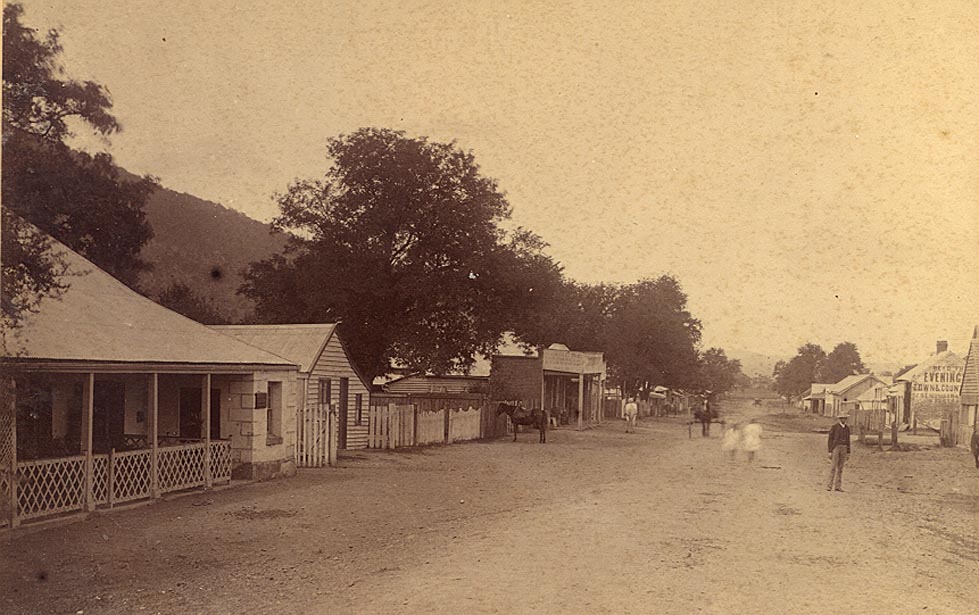
It would appear that meat and milk and butter would have been obtained from Benjamin's herds, vegetables would have come from their gardens, the tea, sugar and flour could be obtained readily from Mr Beaven's store in Haydonton or Mr Rundle's store in Murrurundi, at both of which places clothing of all types was on sale. For footwear Mr Reardon a shoemaker lived almost opposite Benjamin's land. While conditions under which the Hall family lived would nowadays be regarded as primitive, for Eliza conditions in Haydonton would probably have been the best she had experienced since her assignment to Rueben Chapman ceased.
Late in 1842 and in 1843 prices of sheep and cattle collapsed as did wool prices and many graziers became bankrupt or close to bankruptcy . The collapse of prices affected Benjamin whose livelihood was principally based on cattle raising. Horses however in general maintained their value.
In 1841/2 a young man John Chilcott occupied under licence from the Crown an area called Doughboy Hollow station. Roughly this station included all the land between Doughboy Hollow Creek on the west and the main Liverpool range on the south and east and northwards to the top of the spur forming the northern side of the valley in which what is now known as Chilcott's Creek runs. It comprised all mountainous land and included a number of glens which were entered through narrow gorges which could easily be closed off to hold stock therein. The property also was close to the Great North road or track.
John Chilcott's manager on the station was one Alexander Paterson and with him Benjamin entered into an arrangement whereby they would acquire horses and cattle without regard to who the owners were and hold them on Doughboy Hollow station until they could profitably dispose of them. It appears that John Chilcott was aware of Paterson's plans though personally he took no part.
Paterson and Benjamin evolved a scheme which involved capturing a blood mare with a good foal at foot, killing the mare, raising the foal and disposing of it as a yearling or older at a good price. The merit of the scheme was that it was almost impossible to identify the true owner of the young horses.
Which of them devised the scheme is unknown.
It appears that Benjamin and Paterson commenced their association in 1843 and soon complaints by persons who had lost their horses began to be received by the Police at Murrurundi and their attention was directed towards them.
Benjamin was on November 12, 1844 charged with horse stealing but he established that he had bought the horse in question and the charge was dropped.
He and Paterson continued their activities and in 1845 Benjamin stole horses — valuable animals from Archibald Bell of Milgarra and J.K. Abbott who owned land just north of the site of Wingen among others.
Unfortunately, Archibald Bell was one of the most prominent settlers in the Upper Hunter and J.K. Abbott was deputy sheriff of the district. They got together other settlers to form an association for the suppression of horse and cattle stealing offering rewards for evidence leading to the conviction of offenders. The police directed by the local magistrates were under pressure to bring the horse and cattle stealing to an end and led by the Chief Constable James Johnston and by the Clerk of Petty Sessions Mr. T.J. Blair began the task of getting together the available evidence.
While the investigations were proceeding John Chilcott was on June 28, accidentally killed.
The police in addition to evidence from J.K. Abbott were able to get from Benjamin's associates details of his and Paterson's activities — one informant claimed that Benjamin had admitted to him the stealing and killing of Archibald Bell's mare. After placing this evidence before the Murrurundi magistrates they decided to issue warrants for the arrest of Benjamin and Paterson on July 8, 1845.
On that day and as the warrants were being prepared Benjamin was sitting on the verandah of the Murrurundi Court House (not the present building but an earlier one). Why he was there does not appear. Perhaps he was asked to attend for questioning. However the lockup keeper to whom Benjamin had been supplying milk warned him of the preparation of the warrants. After asking him to inform Benjamin's wife and ask her to get William to get Benjamin's horse from the blacksmith and bring it up Hall's Creek where he would meet him, Benjamin left heading into the scrub on the hill above the courthouse.
The message to Eliza was duly passed to her and William got the horse and brought it up Hall's Creek. It is possible that the blacksmith was working in the blacksmith's shop on Benjamin's land but it is more likely that the blacksmith was William Wilson who was the principal blacksmith in Haydonton in those days and who resided in a house on his land, the first block on the north side of the Great North Road as the township is entered from the direction of Scone.
William got the horse and brought it up Hall's Creek, Benjamin emerged from the scrub, gave him instructions and rode away up the creek within 10 minutes of his appearance.
After Benjamin's disappearance William was brought before the Murrurundi magistrates to give his account of Benjamin's escape. He was also questioned as to the stealing of horses and gave detailed evidence as to the tasking of Abbott's horses
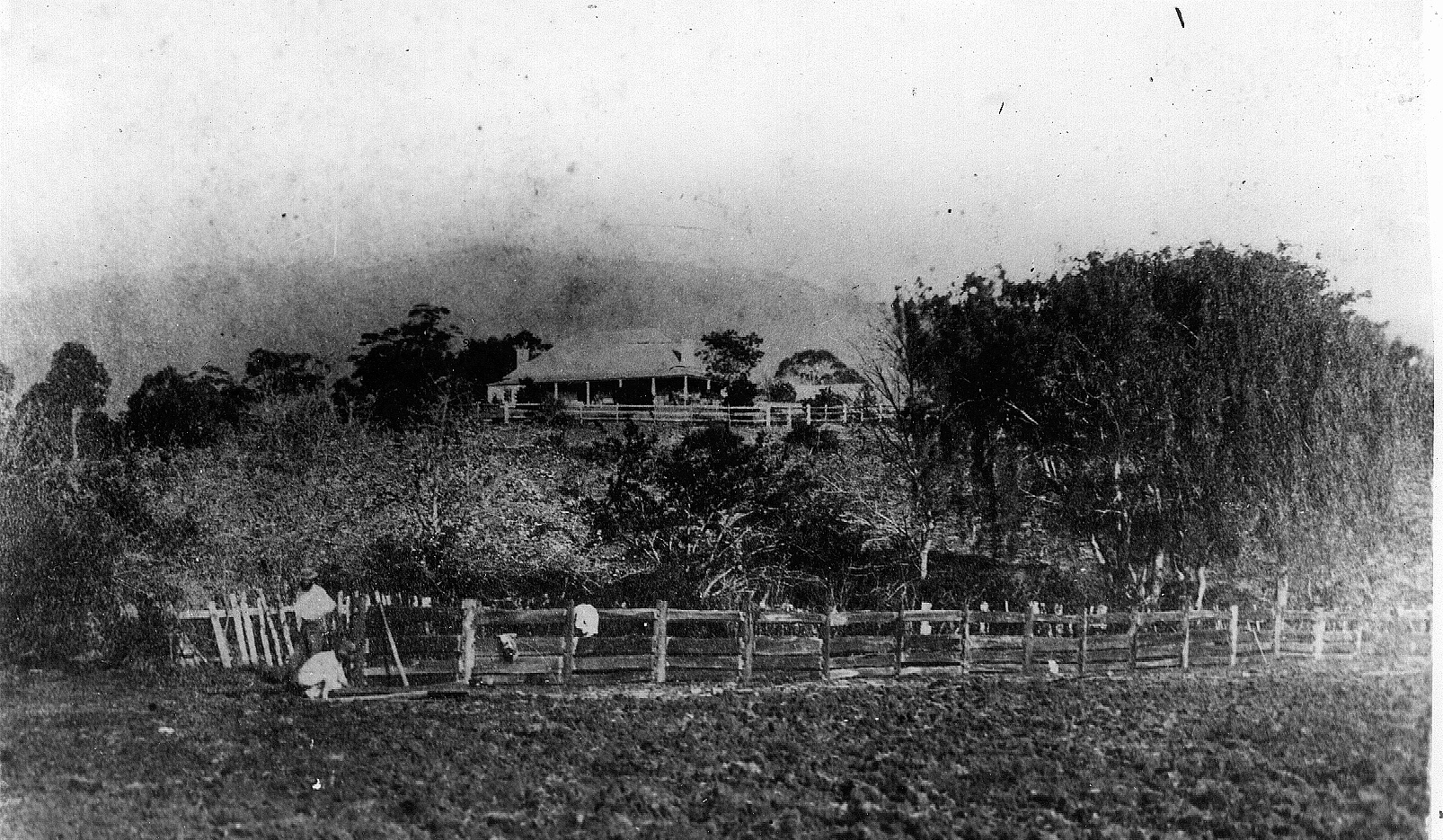
William stated that as directed by his father he had collected Mr Abbott's horses at Mrs Abbott's stockyard (this would appear to be on Glengarry which was then leased by the Abbotts). He then drove the horses away from the bank between Abbott's and Northey (Northey was the licensee of the Burning Mountain Inn at the foot of Warland's Range) across the ridges to a yard on Dry Creek (presumably the creek now know as Stoney Creek). From the yard he drove the horses up Dry Creek and across to Street's Creek (now Petwyn Vale Creek) where he stabbed one mare and drove the others and two fillies over the range to the back of the Catholic Chapel (St. Joseph's Church Murrurundi). From the chapel he drove the animals up Stonequarry Ridge and then across the river (Page's River) between David Teys' house (on Temple Court) and Mr Brodie's (Glenalvon homestead pictured below) over the Main Range to Chilcott's Creek and up that creek past the Basins where the horses were left at a stockyard (Chilcott's Creek, the Basins and the stockyard were all on Doughboy Hollow Station).
After delivering the horses William rode northwards through a gap in the Range to Kangaroo Flat (the southern end of A. Loder's sheep station — Colley Creek) and then returned home by a different route through McGeckie's Gap (probably the saddle in the Main Range near Wallabadah Rock).
It is notable that apart from saying he received the horses from his father William does not mention anyone assisting him, yet the ride droving horses would have taken three or four days plus another day to return home. The whole ride was an extraordinary feat if unaided for a boy of just 11 years — more so when one considers that to get from Street's Creek to the back of St. Joseph's Chapel involved crossing a steep and lofty mountain ∼ Warland's Range ∼ covered with forest and to get from St. Joseph's to the stopping place on Chilcott's Creek involved passing through the Murrurundi Gap again steep and lofty and also well used by travellers including bullock drays.
There is no record at all as to how Benjamin Hall got away from the Murrurundi district. It is likely that he went to Doughboy Hollow Station by the route followed by William but in the reverse direction, for Alexander Paterson was missing when the Clerk of Petty Sessions T.J. Blair and the police arrived there on 15th July.
It is also likely that he rode from Doughboy Hollow Station to his squatterage and having collected such horses and cattle as may readily have been available there with the livestock, rode well out onto the Liverpool Plains keeping away from large stations and settlements. He would not have stopped at the squatterage as the Police would have been aware of its location. Taking cattle and horses with him would not only have provided him with means for his subsistence by selling horses and cattle but also, as movements of stock were common, have been the means of keeping down reports of his whereabouts getting back to Murrurundi.
Back to the contents